
Colorful Shore of Lake Huron Beach, Ontario Canada?
No, Nope, Nada, Nein, it’s not.
Please
Respect
Copyright
Copyright & the Colorful Rocks of Lake Huron
A Creator’s Guide to What Happens When Your Work Goes Viral — Without You
Hi. I’m the photographer behind this image.
Years ago, I stumbled into a rabbit hole after a friend mentioned seeing this photo on a popular Facebook Geology/Rock Page, it had gained 50,000 shares and 32,000 reactions for a single post, exponentially more than the typical post on the Page. It had gone viral for that Page; they were benefitting greatly from the reach and exposure. My watermark was removed, no credit – just an odd title “Colorful Shore of Lake Huron Beach Rocks, Ontario” (except the photo is from Michigan, not Ontario, Canada) – and the craziness just grew from there.
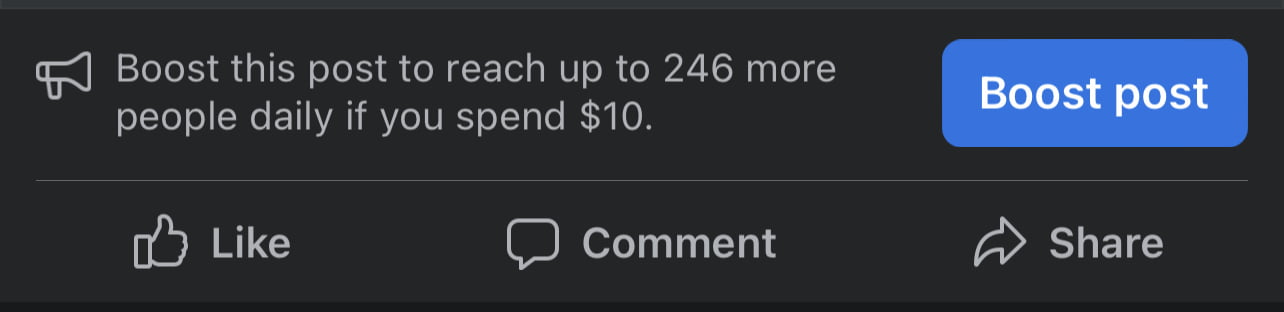
At the same time, Facebook would send me notifications for my own page: “Boost this post for $10 and reach another 246 people!” I then thought… “Huh, I know that Page reached at minimum 50,000 people, that’s about $2032 minimum (and likely much higher due to all the reactions on shares) in advertising of that Page for a single post!“
Then I wondered, “Who else is doing this?”
Turned out – A LOT! Many thousands doing the same thing. Facebook’s own engineers at the time even knew about such tactics, where Pages or Groups would steal popular content to post it on their own feeds to gain the benefits of shares, likes, and follows. They labeled it manufactured virality.
It wasn’t just on Facebook; it was across all social media platforms designed to keep users engaged and effectively encouraging Page owners to join the game, often earning money in the pursuit of growth and reach in a global competition for your clicks and attention. You can easily see how it happens — some rando person takes some “rando” viral image hoping to make money or increase the popularity of their page. Seems like easy money, right? Just like finding a wallet, eh?
The Social Media Paradox
Platforms like Facebook and Instagram make sharing easy—but they also enable massive copyright abuse. They also do the bare minimum required by law to educate users with language buried deep within their Terms of Service (TOS). Everyone reads those things, right?
Here’s the difference:
- Sharing a post directly from the content creator’s source / post = okay
- Copying, reposting, or reuploading without permission or license = infringement.
Why does it matter? Because when you copy someone else’s work and post it as a native new post, you steal their traffic—and their chance to be seen. Even photos I’ve never posted on social media were taken from my website and distributed. Or worse, they are freebooted from a legitimate licensee.
Think about it: You post a photo of colorful rocks. Someone copies and reposts it on their page, separating where it came from. Their followers see it first. They get likes. They grow. The original creator gets nothing.
That’s not just unfair—it’s economic theft – even if you are not directly making money on it.
It forced me to face the realities of how much people think about creators’ intellectual property on social media. Largely, they don’t – even if laser-focused on how many likes or shares their post got. Not just photos, but graphic arts, writing, music, journalism, etc.
Freebooting
noun. & adj. , 16th century.
– piracy or plundering
– The practice of downloading creative content and then reposting it without the creator’s permission, usually in order to accumulate a large following or for commercial profit through advertising revenue.
– an act of a freeloader
What People Don’t Understand
Many people don’t realize how widespread this is—because they’re doing it themselves.
One minute, someone will say: “How dare you steal my art?”
Next, they’ll post a cartoon without permission—or use a photo from the internet to promote their business.
This isn’t always malice. Sometimes it’s ignorance. Other times, it’s convenience. Or greed – monetary or our own brains’ cravings – gotta get those dopamine hits, right? Ignorance of the law simply does not play out well in court.
The result is the same: creators lose control over how their work is used—and who benefits. It’s not just piracy, it’s content leeching.
TL;DR: The Bottom Line
- Copyright = exclusive right to copy.
- Copying and reposting photos without permission is infringement—even on social media.
- It harms creators, steals traffic, and erodes trust in the creative community.
- You don’t have to be a lawyer to understand this: if you didn’t make it, ask if you can post it.
If you’re okay with that? Great.
If you care about creativity—about artists being seen, credited, and paid—then don’t be part of the problem.
Did You Know?
There are online marketplaces for buying and selling Facebook Pages, Instagram Pages, YouTube, TikTok, etc. They know some people would rather buy a Page of followers than do all the work it takes to create them.
Many of these Pages use stolen creative content to boost their follower count. A Page with no commercial intent (even under disguise as such) can later be sold to someone else with commercial intent for a nice profit.
Please don’t support this type of activity, even if they look “innocent” by giving credit. If you follow pages dedicated to certain interests, like wolves, cats, beaches, and travel, there is a good chance they are using stolen content.
Unauthorized use examples:

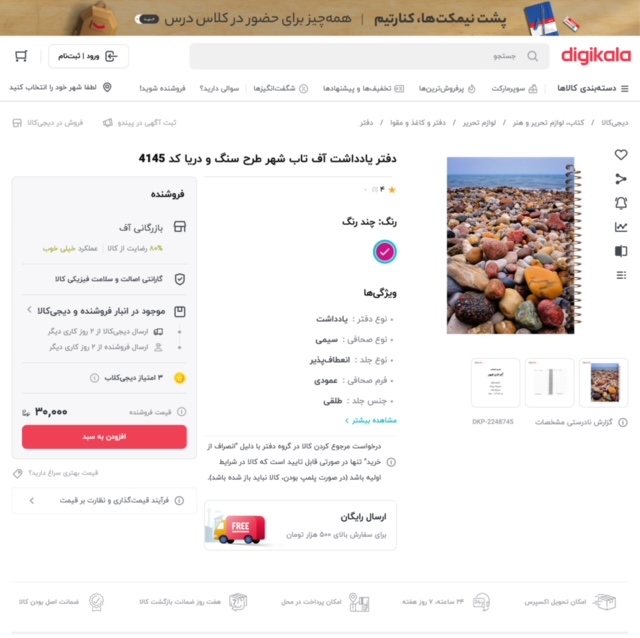

These are just a few of the obvious commercial uses that would typically require a commercial license. They are really not surprising given the global market for counterfeit goods. Trust me, the uses get a lot stranger than this (think weapons, bedspreads, cosmetics – how’s that for a grouping?) It also shows that even “web-sized” jpegs will be grabbed by anyone trying to make a buck, no matter the final output quality.
An uphill battle to protect your kids
For artists, photographers, writers, musicians—this isn’t just about money.
It’s about ownership, respect, your rights, pride in your work, and oh yeah … international intellectual property laws.
As Gary Larson (creator of The Far Side) once wrote:
“My cartoons have been taken and used to help sell everything from doughnuts to rodent control.”
—And he added, with that classic Larson dry humor: “At least I offer range…“
He avoided the internet for years. Why? Because his work was being stolen everywhere—without permission or credit. Fortunately, he experienced success prior to the explosion of the internet, where cartoonists are paid for the distribution of their works via syndication deals.
His reasoning still applies to most of us today: Your creative work is your “kid.” You care where it goes. Who it “hangs out with.” What it’s used for.
And when someone takes it and uses it to promote guns, ideology, or a product you don’t support… that’s unacceptable and, as a matter of fact, illegal.
Sometimes, your photo may hang out with other kids, like at a children’s costume contest at a convent in India, of all places! In other instances, it’s posted with pictures of guns and stacks of cash, bedspreads to cosmetics, manufactured virality using a stolen, popular photo for advertising and reach.
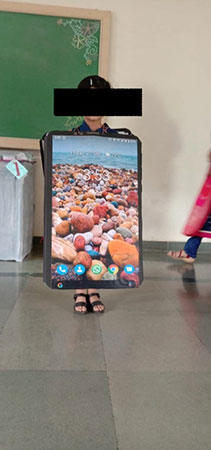
A discovered use at a costume contest at a convent in India … OK, cute … but c’mon!
(I do hope she won!)
Chasing infringements absolutely sucks. You encounter spam, malware, foreign bot pages, and foreign photo farms just churning entire directories of photographs given to them across multiple fake accounts. Many artists don’t even bother or freely give their work away with a shrug. It is simply a soul-sucking activity. So why bother? Well, nobody is going to speak up for the value of your work or how social media perpetuates this problem unless YOU do.
Why Copying and Reposting (Freebooting) Photos on Facebook/Instagram gets you in trouble …
If you don’t understand by now why this is wrong, social media company attorneys go to great lengths to spell it out in those long Terms of Service (TOS) agreements you have to agree to before using the platforms. Here are two basic reasons:

REASON #1
There is a bullet point in the Facebook TOS that you agree to by using Facebook, and what you can share and do. Photographs and all other creative works are largely protected by intellectual property laws.
Violating this gives them reason to restrict your account, its reach, and/or monetization abilities. It is further explained in their help pages here.
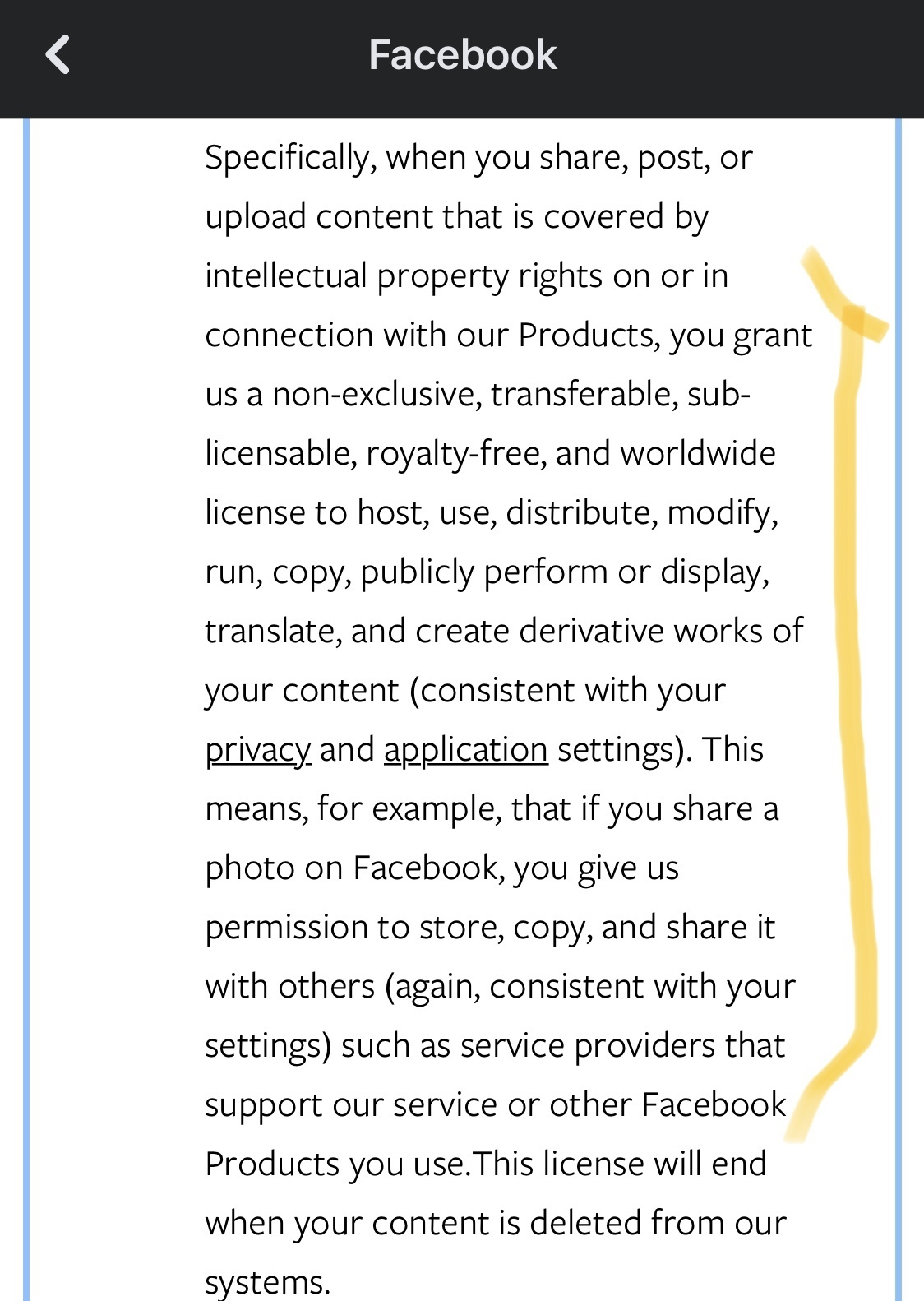
REASON #2
You gave legal permission to Facebook to distribute content that someone else owns (including being trained on for AI).
You do not have that legal right, authority, or permission.
Audience of all infringments
Estimated Advertising Value (USD) Minimum
Sales based on "Exposure"
The numbers on Facebook alone*
(Reach Data tracked 19-Feb-2019 to 05-Feb-2022)
* only publicly known figures and found uses, does not include non-public shares making these very conservative figures
Individuals who manage Facebook Pages are acquainted with notifications from Facebook indicating that “Pay $25 to Boost and Reach ‘x’ more people.”
However, I observed numerous Pages utilizing this photograph to effectively enhance their posts rather than incurring additional costs with Meta for increased reach. Part of that journey down the rabbit hole involved looking at potential reach and advertising value of a single viral image provided.
While it is challenging to ascertain the precise formula for the cost of reach as it seems to be constantly changing, it is evident that many Page administrators on Facebook opt to obtain content through unauthorized means rather than paying for the reach. This practice is comparable to individuals distributing counterfeit copies of movies or music.
While there is considerable debate regarding the ethical implications of this business model and the accountability of social media platforms, the decision to engage in unauthorized content acquisition ultimately rests with the individual who posts the content.
Pillars of the Copyright Problem
Distribution
This photograph continues to be distributed without explicit permission. It is in the term of “copyright” – meaning rights to copy. As the photographer, I do have a basic right to have a say in how it is distributed and how it is used. It doesn’t matter if it is for your business, religious views, influencer account, hobby page, or your personal collection of 5000 friends.
Exploitation
Most uses appear to be for self-serving gains, such as greater reach, engagement, and more likes. Facebook’s own engineers acknowledge this.
It also spreads when one Page sees another getting attention, they take the content because they want the likes and followers too. It becomes a self-perpetuating cycle.
Volume
Even the U.S. Copyright Office uses and acknowledges the term “whack-a-mole” to describe the volume of internet infringement. The sheer volume can make many artists just throw up their hands from being overwhelmed and tired. I’ve faced these feelings and just try to do what I can to make a tiny dent.
Current laws to address the volume are insufficient, created by lawmakers who had no concept or grasp of the magnitude individual creators would face.
Attribution & Provenance
The CMI (Copyright Management Information) watermark was sloppily buffed out, altered, and/or replaced by someone, reducing the likelihood of identifying the rightful owner. This rarely stops anyone from using it anyway. Most comic strips have copyright indicators, yet people pass them around all the time.
Not knowing is a poor defense in copyright. Nobody forces you to post content you don’t own. It is not legally required to have my name or copyright stamp on it. Some folks even have the … <ahem!> STONES … to put their own branding on the photo.
Advertising
Advertising is big business and costs businesses a lot of money. Meta makes a lot of money from it and is always poking you to spend more money to boost your reach. Using a popular photo to gain more exposure and reach is advertising. If you hear a Taylor Swift song in a commercial or in a video, you can bet she is being paid for it. If she isn’t, I imagine she has pretty good lawyers to remedy that.
Using creative content for advertising requires licensing.
Education
Many people don’t understand copyright laws, let alone media literacy, in this age of abundant sources. They can be complicated; there are myths and misinformation. But it can also be quite simple to avoid trouble. If you don’t have explicit permission to post someone else’s work, no one is forcing you to do so.
Some take the gamble they won’t be caught. It doesn’t matter if you aren’t making money or gaining benefits from it, you are copying and distributing, which are exclusive rights given to the creator of the content unless it is otherwise declared public domain (like governmental creative assets or historical materials).
Artist Rights
Under the United States and international laws, content creators have the exclusive rights to:
- distribute
- copy/reproduce
- perform
- adapt, modify, create derivatives
- benefit financially
- control public display
- assign any or all of these rights to another party
International Laws and Treaties on IP
Many international treaties have been signed to protect the rights of creators. You can learn more at these links:
- US Copyright Office: https://www.copyright.gov
- UN / World Intellectual Property Organization (WIPO) Copyright Treaty (WCT)
- Berne Convention
- TRIPS Agreement
- Copyright Education – Copyright Alliance
The More You Know
The Misinformation
Location 'X'
It’s in Port Huron, Michigan! (Shhhh! It’s a secret)
It is Lake Huron!
All of the Great Lakes are amazing! This is the western shore, not the eastern of Lake Huron. It is not Lake Ontario, Superior, the Red Sea, Greece … people believe far worse things from the internet.
It's public domain.
It is NOT. At least wait a bit after I’m dead.
It is a "beach full of rocks."
I used a creative perspective with a wide-angle lens, low to the ground, to emphasize the rocks. The beach is mostly sand but is often visited by rockhounds. But hey, go looking until your heart is content.
"I found it on Google"
It doesn’t matter where you found it, Google, Pinterest, your cousin, or the kid you had make your website. Seeing it on a public website does not make it a public domain work. If you don’t have a license from me or something in writing, you don’t have permission.
How can you help?
Follow and interact with artist's pages
They will appreciate you like their work. Show respect by using the share buttons to preserve provenance.
Share a link to this page
If you’ve seen this photo, share a link to this page and maybe help educate someone. You will do all artists a big favor.
Stop enabling theft
Stop supporting/liking/following photo distribution/theme pages like “Awesome Nature,” “I Grew Up in Michigan,” “National Geographic Nature,” or “David Attenborough Fans” (which have nothing to do with National Geographic or Sir Attenborough).
Most take advantage of your love of a subject and put stolen content in your feed to grow their follower base. Even if there is a photo credit, it does not mean they have permission!
Stop for a moment and think about what you are posting
Avoiding copyright trouble can be as simple as: if you don’t know for certain, don’t post it.
“Colorful Shore of Lake Huron Beach” in many languages
Unfortunately this photograph is stolen and distributed around the world. So “Colorful Shore of Lake Huron Beach ” also appears as: “piedras de colores naturales lago huron“, “Playa de piedras coloridas en las orillas del lago huron“, “Pietre colorate del lago Huron, Canada” , “Spiaggia di pietre colorate sulle rive del lago Huron, in Canada” , “Praia de pedras coloridas nas margens do lago Huron, no Canadá“, “Renkli K?y?s?yla Huron Gölü/Ontario/Kanada”, “Praia cheia de pedras coloridas, no Canadá:, “Buntes Ufer von Lake Huron Beach, Kanada” and so on.
It’s been found in Iran to Argentina, Ethiopia to Uruguay.
Some FAQ if you received notice from Facebook
Why did I get reported?
Please understand this isn’t personal. You aren’t being singled out any more than a police officer would have pulled you specifically over for speeding. Every business engages in some sort of loss prevention mitigation, which I limit for my own mental health. Some shoplifters get caught, others get away with it. In this case, it is licensing loss mitigation, to make a small dent in the exploitation and freebooting of my work, and to contribute to education in the process for the benefit of other artists.
The Backstory:
- Chances are, you got caught up in significant efforts to purge unauthorized uses on Facebook and other platforms. Some of these processes are AUTOMATED. If you aren’t familiar with Facebook’s Copyright Policies, you will find them here.
- Even if you don’t live in the United States, you are still required to follow Meta / Facebook’s (and other platforms) TOS by using the platform. They actually do quite minimal enforcement in comparison to the number of infringements just to stay in compliance with the law. Most countries also have treaties in place to respect original artists’ content and copyright. The burden largely falls on creators to do anything.
- If you violate copyright, your account’s reach can be impacted and intentionally limited!

A sample notice received on Facebook about a copyright infringement.
Why NOW? It was posted years ago!
Let it be known that I do not have an all-seeing eye that watches over everything on the internet. I am not the NSA. Even with some modern and haphazard tools to track such things down, they still have imperfect results and take a huge amount of time to sort. Something posted years ago may have only recently come to my attention. It is not my job to police your behavior 24/7.
Why didn't you just ask me to take it down?
This is a common response and fair question, if this was a singular situation and simply doesn’t recognize the volume on my end. How many do you think is a fair number to reach out to? Ten? Hundreds? Thousands?
Not everyone is nice about it or even responds. Some even go as far as lying to Meta, claiming the photo is theirs. So then you have to keep track of who responded, who didn’t. I’ve been there and done this. There are an enormous number of pseudonyms, hackers, and fake news accounts, making “asking first” unrealistic given the scale of the problem.
Perhaps a better courtesy would be asking if you could post it to begin with, eh?
Facebook Locked Me Out of my Account!!
Fair warning – This can happen and has happened! This shouldn’t be a surprise to you right now because if it has reached this point, you’ve already been formally warned many times about it. Please review Facebook’s strike policy.
Facebook is following what is required by US Law for repeat infringers. A few days in Facebook Jail isn’t the end of the world. If it is permanent, well, then you have been quite naughty, eh? Being locked out indicates you have many strikes on your account, which I have no visibility or knowledge about. You need to take it up with the corporate legal entities.
Is this photo public domain? "I saw it on Google."
This photo is not public domain. Any claim that it is would simply be false. There is a big legal difference between something being “public domain” and appearing on a publicly available website or service. Claiming such a thing is pure ignorance.
You should be happy for the exposure
Exposure rarely amounts to anything. Here’s the PROOF.
The Backstory:
If anything, the repeated sharing of this image has decreased its market value for me. I have lost more revenue than gained. The vast majority have no idea who created this image because of the diminished watermark and sharing w/o any link attribution to my Facebook page or my website.
Musicians are quite familiar with this game – except people usually become familiar with the artist behind a song, not so much with photographs. One such story has a quote I can fully relate to: “I don’t need my name in the credits … I need a license fee!”
I have a big audience - I could share your work there
Short Answer: I tried this, it doesn’t really pan out like the offer suggests – so no thanks. If your big audience was created through freebooting the work of others, it seems like an absurd proposition.
Why do you care about people sharing and admiring a photo?
Sure, you can like the photo on my social accounts. There is no need to copy and paste it elsewhere unless you are trying to undermine where it came from.
The Backstory:
If I largely ignore the fact that 99.9% of the use is without attribution or any attempt at such, other uses such as these come into play:
- promoting various political ideologies or religious views
- use by bad actors, hackers, political leaders, fake account creators, scammers, and profiteers
- using the photo to promote a business, product line or personality, directly or indirectly
- using the photo to promote other channels (YouTube, TikTok, etc.)
- photo dumps grouping this image with anything from AK-47 assault weapons (true story!) to beauty products (true story!)
- diminished value of an intellectual property asset I own
- using the photo to gain more followers to your photo-sharing Page/Group (whether you monetize it or not, or plan to)
- It’s posted so much that people think it is “public domain” – which it is not.
So you can see a large variety of nefarious uses (all based on first-hand experience) exist. If you are also distributing it outside of my official channels, you are contributing to the availability.
What's the purpose of social media if you can't share?
Recognize the difference between posting content on your timeline and sharing it from the original source. Separating content from its intended sharing violates someone’s work, intentionally or not. Provenance is crucial in the art world and should be in the digital world, too.
This is a delicate balance between marketing and sharing your work, copyright knowledge gaps, and abuse of availability.
Thanks for taking the time to understand.
Further questions?