

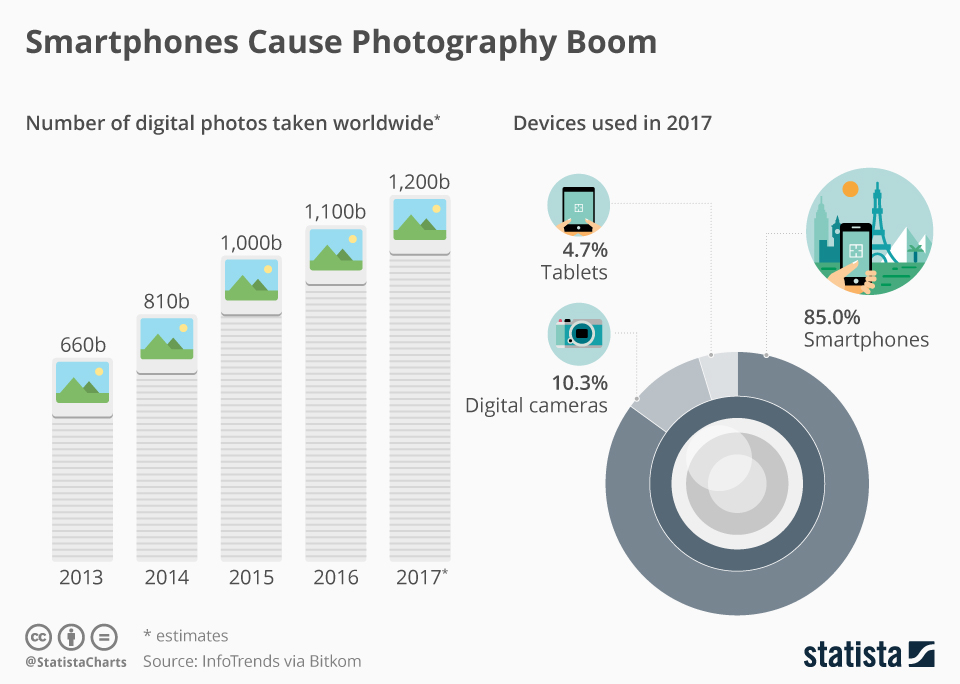
Last year, a new organization called “Nature First” was formed. It is a collection of incredibly passionate, caring, and dedicated nature photographers who want to spread the education of field ethics. We create more than 1.2 trillion digital photographs a year, going to increasing lengths to get something unique. The absolute gluttony of imagery and the ease of use of our devices make it quite difficult for any particular photographer to stand out. Many are pushing, deliberately crossing, or ignorant of ethical boundaries in this effort.
Of course, Nature First isn’t the first organization to take on such an educational effort, nor will it be the last. Their 7 principles (reflected later in this post) are good common sense. The organization name itself is THE primary principle—straightforward. The name itself fed into a deeply probing question that has been on my mind for a long time. That simple proclamation in the name flipped into an existential question.
Superbloom calamity of 2019
One event of 2019 reflected an array of not-so-flattering human interactions with nature: the super bloom of California poppies. This amazing spectacle, visible from space, drew in more crowds than a buy-one-get-one TV free sale on Black Friday, with Jason Mamoa as the guest salesman. Thousands of shutterbugs dreamed of the best-damn-poppy-photo-ever.
I only watched this unfold from afar, along with a lot of finger-wagging. Humans were being…well, humans. In drawing worldwide media coverage, local small towns struggled to keep up with the influx of “poppy-apocalypse” tourists. Field ethics, like common sense, do not come naturally, especially when “everyone is a photographer” these days.
In the wake of the flower-stomper march, the North American Nature Photography Association (NANPA) issued a statement reminding photographers ;
“At a minimum, we photographers should set a good example, follow the rules and practices NANPA’s Principles of Ethical Field Practice and the social media guidance from the Leave No Trace Center for Outdoor Ethics. If we’re leading workshops, Meetup groups or talking to camera clubs, it’s an opportunity to encourage responsible, ethical behavior in others, to spread the word about treating Mother Nature with care and respect so these natural marvels will be there, not just for us but for our children and future generations to enjoy.”
NANPA anonymous “Blog Poster”
It is a reasonable statement in a “we as a professional organization should make a statement” kind of way. Not as confrontational as “Get your flower-stomping, influencer asses off the poppies!!” but a point made, even if as an “anonymous blog poster” (fail). Of course, I am willing to bet good money that 99% of those tourists visiting California’s blooming Walker Canyon have never heard of NANPA.
They more than likely questioned why these wine snobs were harassing us. (ToDo Note to NANPA: Buy an educational ad in the back of Flower Stomper Annual.) Local officials did the best they could to handle the climactic situation. Signage and patrols could only go so far in holding back an influencer army wielding selfie sticks.
Seeing and feeling consequences
Of course, the irony of “common sense” is that it isn’t so common. Some people grow up with a respect for nature, and others are well, hatched from something. When you learn to scuba dive, good dive instructors remind everyone – stay off the coral, be spatially conscious of your movement 360 degrees around you – up, down, all-around.
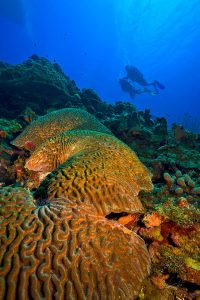
Some facilities ban divers from wearing gloves because it makes them more aware of touching things. Fire coral tends to remind the more dense bubble blowers with immediate and lasting feedback. Other corals without defense mechanisms suffer the consequence long after the visitor is home relaxing on the couch.
Divemasters justifiably directed an evil eye toward divers with cameras in their hands. They have witnessed far too many shutterbugs oblivious to damaging, even killing, a 1000-year-old piece of coral in pursuit of a photograph. This makes blatant flower-stomping appear rudimentarily careless.
Time to take off the gloves
We live in a time when many people are wearing gloves of varying thickness. They have desensitized us to the consequences of our actions, especially if not immediately noticeable. That anonymous NANPA blog poster reminded us to not only think of the present in requesting respect for natural marvels so they “…will be there, not just for us but for our children and future generations to enjoy.”
I know that my very existence is causing harm as a human being living in a country with the largest historical carbon footprint on this planet. Obviously, greenhouse gases aren’t as warm and fuzzy as the nematocysts of fire coral. However, anyone who is aware of global news can practically feel the sting of what is happening.
Collectively, that fire coral may be more threatened by an unaware frequent international flyer than a clumsy diver. Our oceans are acidifying and warming, leading to massive death. The IPCC report of 2018 indicates just another 0.4°C of warming (ie. 1.5° total above pre-industrial, we are at 1.1°C) could kill 70-90% of the world’s coral reefs. We have more than 30 years of accumulated knowledge of this problem we have caused with the climate. And don’t let anyone persuade you differently, the science is now as certain as the science around gravity.
When I get home from a day photographing on the ice, I charge my camera in a warm house, maybe even take a hot shower. Like it or not, I am (at least currently) using fossil fuels. Fossil fuels were involved in creating a device that allowed me to interact with nature. It is in energy coming from the wall, the way my house is heated, and the devices we use. Good thing I am safe from the critical eyes of those flower-stompers in here. I’ll bet you didn’t know they are quite a judgmental group.

Footprints everywhere – on the land and in the air
Photography ethics are an endless and evolving debate. It didn’t start last year, nor will it end as we enter this new decade. Nature photographers have plenty of discussions over the various intricacies and actions in pursuit of our art, our hobby, our love. We debate over captions, we debate over captives. Is it time we debate over carbon? How far are we willing to track our own footprints? How far is it reasonable?
Susan Clayton is Whitmore-Williams Professor of Psychology and chair of environmental studies at the College of Wooster. She writes in an article on behavioral science about the abstract nature of our unseen footprints:
“People tend to be more convinced by the concrete than the abstract, and to give more weight to present sacrifices than to future consequences, all of which makes environmental change seem remote.”
Clayton, Susan. “Psychology’s Role In Addressing Environmental Problems.” Behavioral Scientist, 13 May 2017
It is pretty easy to fume over some idiot laying in the middle of the poppies for a photo op. You can get upset at a photo workshop leader that ends up creating visible damage by repeatedly taking students to sensitive areas. But how about one that flies a dozen people to another continent to photograph hummingbirds – every year?
Those invisible footprints are harder to trace and account for. In fact, they are also easy to forget, because the social cost of carbon isn’t built into your typical photo tour price structure or anything we do for that matter.
Pro-environmental behavior
The complexity of turning environmental concern into pro-environmental behavior is illustrated nicely by a model in a 2002 research paper by Kollmuss & Agyeman.

Kollmuss & Agyeman found many previous behavior models to be overly simplistic, not accounting for the significant barriers. We can hope as artists who are passionate about the welfare of our subjects that we overcome some of these barriers with more motivation than your typical flower-stomper or coral-kicker.
However, every time I think about that, I look at simple things around my house – plastic things, wood things, metal things, electronic things. Many of these are related to my pursuit of photographs. Was nature first when I purchased these? How much has my own consumerism contributed to the threats the ecosystems and biodiversity around the planet now face?
WWAD?
I often wonder what a conversation with Ansel Adams would be like today in discussing climate change and the role photographers play in helping or contributing to it. After all, it was Adams’ masterful landscape work that helped energize the modern environmental movement. He used his powerful photographs throughout his life to lobby political leaders on environmental issues. I can only assume he would be actively concerned and vocal about all of this.
“Conservation must now become a cooperative principle, not a quasi-cult dedicated to limited objectives (no matter how worthy in themselves). Cooperation means involvement with industry, science, education, architecture and planning, social patterns and recreational demands; in brief, it involves compassionate comprehension of the world as it is. The realities of existence cannot be denied; it is the management of these realities which will preserve our way of life if not our very existence.”
Adams, Ansel. Excerpt from remarks before the Platform Committee on the Democratic National Convention, Chicago, Illinois, 24 Aug 1968
Ethics and history
David Leland Hyde wrote about some of the history of photography ethics and environmental awareness in his series Art, Earth, and Ethics more than 5 years ago. In this three-part series of posts, he challenges us to think about consumerism (which photographers, as mostly human beings, take part in just like everyone else) and Leave No Trace principles. He bravely, and with necessity, brings up climate change, which too many nature photographers shy away from discussing, at least publicly and directly.
“Much of this can be debated indefinitely and is, but my intent in mentioning it here to begin with is to emphasize that these are serious, grown up problems that must be reckoned with, not forgotten about or avoided indefinitely. Each of us must start now to act in ways that have less environmental impact.”
Hyde, David Leland. “Art, Earth and Ethics 2.” Landscape Photography Reader: Beyond Art & Environment, David Leland Hyde, 24 July 2014
This planet does indeed have a lot of very real, grown-up problems and it is hard, if not painful, to look in the mirror. When the issues of local-impact field ethics (like trampling flowers, harassment of wildlife, vandalism) come up – there is plenty of outrage. You will find no shortage of ethically-minded photographers who readily speak out. But if we are to take an honest, serious look at what globetrotting pursuits of photographs entail as a carbon footprint, it gets about as comfortable as swallowing a chunk of coal.
There is some validity in a response that espouses on the virtues of bringing visual communication into the discussion of the environment. Adams is a perfect example. And today, we have more photographs created every year than have ever been created before the dawn of digital. Few can compare to the impact of what Ansel produced. Now, we already know there are beautiful places all across this planet. When the power and uniqueness of what Adams brought to the conservation begin to fade with repetition, I wonder what power “the pretty picture” still holds in prompting action.
Just how many photos?
It is a similar question to what Bill McKibben, author, and founder of 350.org, asked in a provocative article in DoubleTake Magazine in 1997. Even back then, before the explosion of digital photography and smartphones, questions were being asked on how many wildlife photographs do we really need, especially if the pursuit of them is detrimental overall.

I reached out to McKibben to poke his memory about this past work. I was curious if, with the hindsight of all he has been involved with since then, he had a current take on it. Asking someone about an article they wrote 22 years prior is always a long shot, yet surprisingly, Bill did reply to me.
Understandably, he admitted he hadn’t thought about it much since then but suggested photographers should focus more on environmental work like Chris Jordan’s heart-wrenching work with albatrosses and plastic. I also thought of projects like Joel Sartore’s Photo Ark and James Balog’s work with Chasing Ice and The Human Element. And yet, does anyone really need to see another picture of a polar bear on a piece of ice to know we have a problem?
Too political?
I have seen photographers post about environmental issues on social media. One, if not many, of their followers will comment, “I wish you would just stick to posting pictures.” Ironically, I have seen the same with musicians – even those whose lyrics are blatantly political. It is completely predictable. Unfortunately, climate change has become deliberately and dramatically more political than squashing a California Poppy into oblivion.
The age we live in is so incredibly polarized, even for something that will impact everyone, as well as the animals and locations we love. Imagine a dedicated patron of a centuries-old local church being criticized for wanting to talk about and help the crumbling foundation it sits upon. Just don’t tell the property owner next door he can’t have a fracking well.
Overdue Engagement
So Nature First joins other existing organizations of photographers that step up and help the community define those ethical boundaries and the promotion of them. NANPA (different than Nappa) and the International League of Conservation Photographers (iLCP) are a couple of others for a specific focus on nature, wildlife, and landscape photography and film production. In light of the current challenges that face us, I don’t think it is unreasonable to ask whether their ethics scope is inclusive of threats to entire ecosystems. Let’s take a look:
NANPA
NANPA‘s Environmental Statement on their website, circa 2002 (aka. the Dark Ages), doesn’t mention climate change or carbon footprints specifically. However, it is broad enough on environmental science to infer it should be a critical issue on our minds. We have so many environmental issues to contend with, it still requires one to read into the meaning.
I wonder if it is time to specifically call out the “c-word” to promote conversation and thought about what we as photographers so closely connected to this subject matter can do. NANPA does promote some particularly specific items with respect to environmental activism that can be extrapolated to concerns over climate. Here are a select few morsels of this ethics salad:
- “Educating oneself in the natural sciences and issues that affect the environment and landscape.”
- “Being an active and informed citizen in matters of public policy that affect land use and environmental protection.”
- “Becoming involved in appropriate environmental coalitions”
- “Working with scientists and research centers to illustrate and further their work.”
- “Always following an honest path as a nature photographer, communicator, and citizen.”

iLCP
The International League of Conservation Photographers (iLCP) does amazing work around the world by teaming up with scientists for research. They promote the power of visual communication to bring more attention to environmental issues around the world, including climate change. You can find powerful examples of this on their expeditions page.
“Though this might well be the greatest time in history to be a nature photographer, it’s possibly the worst time to be a wild animal. Habitat loss, wildlife trade, pollution, and climate change are all profoundly affecting wildlife. Global wildlife populations have fallen by 58% in the last 50 years, according to the 2018 Living Planet assessment released by the Zoological Society of London and the World Wildlife Fund. If the trend continues, that decline could reach two-thirds of all vertebrates by 2020.”
Groo, Melissa. “From Wild to Captive: A Call for Ethics in Modern Nature Photography.” ICLP – International League of Convervation Photographers, 2018.
I think iLCP sets the bar pretty high and leads by example.
Nature First
The newer organization, Nature First, was formed earlier in 2019, perhaps coincidentally following publicity around the flower stomper stampede. Ethical field practices are again the focus. They promote their seven principles of:
- Prioritize the well-being of nature over photography.
- Educate yourself about the places you photograph.
- Reflect on the possible impact of your actions.
- Use discretion if sharing locations.
- Know and follow rules and regulations.
- Always follow Leave No Trace principles and strive to leave places better than you found them.
- Actively promote and educate others about these principles
It’s basic good stuff. Others think so also, their membership has grown rapidly, amounting to over 1600 members & 50 countries as of this posting. That list includes many fellow photographers for whom I have the deepest respect and admiration, including some outstanding environmental stewards. However, would the scope of these principles include such things as climate change? You would have to assume.
The need to push further
The year 2019 and this past decade, in particular, will be noted as the ignition of climate activism and media attention. We know more than ever about the science and the actions needed to change course. There is overwhelming evidence that this will be the largest challenge humanity has ever faced, and the next decade is an absolutely critical time for action. As such, the scope of our field ethics should include them.
A reported 7.3 Million people worldwide took part in the climate strikes in September of 2019. The Climate Desk journalism collaboration continues to grow and circulate stories about all aspects of climate change spanning multiple media outlets. Scientists are holding free educational courses and are increasingly in the media to bring more people up to speed in what we know, and what we do not. This means you don’t have much of an excuse to claim ignorance. Even the sand knows what is going on.
The activity of “photography” compared to all of the other big hitters in this crisis is probably quite small. However, a trillion photographs are quite a lot! Certainly, a large portion of them is simply cats. Is it bigger than plastic straws? With one study reporting that just 100 companies are responsible for 71% of all emissions, it seems difficult to get into the details of what a particular activity contributes. It is clear that individual actions, while important and example setting, are needed in addition to massive systemic changes.
“If nobody is without carbon sin, who gets to cast the first lump of coal?”
Mann, Michael E. “Individual Choices Won’t Be Enough to Save the Planet.” Time (dedicated Climate issue), 12 Sept. 2019
With the threats facing our environment today, ethical field practices of the individual, like the 7 basics of Nature First, LNT, or any similar set of principles, are actually the minimum anyone should be expected to do. Flower stompers may just go on stomping their little hearts out, so do we set our sights on bigger targets? It would be odd for someone to be passionate about nature and ignore an existential threat to entire ecosystems.
Purity, preaching, and pods
What exactly does it mean when principle #1 is to “prioritize the well being of nature over photography” in the age of a climate crisis? To what extent? How can organizations like these help photographers overcome behavioral barriers in driving systemic change? Can an organization promoting individual ethical principles separate itself from the collective tangential impacts? All very tough questions. All risk being labeled a hypocrite for not practicing what you preach, or being too preachy in general.

Those who focus on carbon purity tests only seek to distract, a simplistic counterpoint pushed by those actively resisting change. Fossil fuels have been integrated into nearly every aspect of our lives over the past 100 years. As Professor Mann explains, few can claim to be completely free of carbon sin. Is it fair to demonize someone who actively plants trees in their community because they drink coffee from pods?
More than likely, the local guide taking you to those exotic photo locations in the poorest nations contributed the least and will be impacted the most. So, we should not descend into purity contests comparing shades of green; everyone can improve. That starts by talking about it, posting about it, and asking questions.
How can photographers promote more consideration of climate?
Climate change is such an enormous global problem, it is overwhelming to think that any particular group of individuals can make any difference. Those exact thoughts were once on the mind of a young lady sitting alone in front of the Swedish parliament. I am pretty sure people trample flowers all over the planet, yet we post signs, wag fingers, create principles to discourage it.
If we are going to promote field ethics, how do we define what is too much of a carbon footprint when we are taking only pictures, and leaving only the visible kind?
- Does it involve a reduction in flying? Will we see photo workshop leaders take stances on flying as climate scientists have?
- What about promoting more local photography vs. traveling to icon after icon?
- How can organizations like NANPA, iLCP, Nature First, etc. help find solutions for those that rely on workshop revenue to create climate-positive adventures?
- Should these organizations promote destinations, countries, airlines, etc. more committed to addressing climate change over others?
- Are there tools to offer workshop leaders to help them promote pro-environmental travel?
- What about gear purchases and the manufacturing footprint of every device? Do we push our equipment manufacturers to become more engaged in sustainability?
- Servers supporting cloud storage and websites use a lot of electricity. Does it factor into your purchasing decision?
Talking about it
It is a lot easier to think of these questions than to hash out the answers. It has to start somewhere. As climate scientist and climate communicator Dr. Katherine Hayhoe states in the above interview, a key aspect is to start talking about it. Remember the nonsensical Nikon vs. Canon arguments? Think of the mental energy wasted on that! When did you last see photographers argue over which brand is greener? We need to shift the conversation.
Did you know camera manufacturers all have sustainability reports? They actually estimate the carbon footprint of their users create by using their wide range of products.
If the makers of your camera are thinking about this, shouldn’t the users?
Sustainability Reports
Nikon | Canon | Fuji | Olympus | Sony | Panasonic
Apple | Google | Samsung
Plenty of people want to do photography for fun, as an artistic passion. Being in nature gets us away from the stresses of everyday life. We go out there to avoid the constant barrage of negative news. Just thinking about this adds stress to a usually enjoyable activity. And if that is the result of you reading this far, I sincerely apologize for pulling you down my rabbit hole.
Well, in a sorry, not sorry kind of way.
Answering the question
I have traveled to some faraway places to go diving, to photograph. The last thing I would want is for someone who has saved their hard-earned money not to see some of these beautiful places for themselves. It just doesn’t feel right telling someone they shouldn’t do that. I can only ask that the gloves come off.

There are still a great many places on this planet I wish to explore. I want to swim with whales. I want to stand on a glacier. But I know in my heart, those personal desires are tempered because I am more aware of the costs, even if I am not directly paying for them in dollars.
What bothers me most – this existential question that started this whole thing in my head – is that I begrudgingly already know the answer. For someone who has spent a lot of time celebrating and promoting the protection of nature, it is profoundly depressing. Yet, I am not going to live in a cave or eat sticks. Perhaps the organizations discussed here aren’t equipped to be professional therapists for these dilemmas. The flower-stompers and coral-kickers may ultimately be unreachable. That means ethical principles are mere guidance counseling for those of us who need reminders now and then.
We are going to leave footprints no matter what we do. From landscapes to wildlife, from macro to aerial, many of us have seen with our own eyes and recorded the changes happening around the world. Somewhere in those trillions of photographs maybe there are the occasional few that prompt some type of meaningful change. And while I may not be happy with the past answers to this plaguing question, it can at least be an aspiration.
“It’s not easy bein’ green.”
Kermit


Wonderfully and thoughtfully written Mark. Thank you ?
Thank you for taking time to read it!
What a fine, well-written, and well-researched post. Staying local for photography is the thing to do, and easy for me, since it’s my practice for the most part, though I have my lapses. But photographers and flower-stomping nature seekers are a relatively small part of the problem and solution. The difficulty is convincing the great mass of others that climate change is a legitimate issue that requires individual and collective action. There are too many who still think that humans are not the primary cause of climate issues, and that no or little action is necessary. I’ve recently talked to people who think this way, sigh.
Thanks, Tom. Note though, in the age of the smartphone – everyone is a photographer – so the group is more inclusive than ever. And my point was directed at our relatively small group of nature seekers because we have organizations that developed guidelines to help others respect the wonders around us. Climate is generally omitted from these principles either intentionally or unintentionally and that needs to change.
Thanks again for all you work writing and researching this. I see the audience for your post is limited to the photographic community. I’m just worried that this message isn’t getting out to a larger group of people who need to be convinced that many things need to change.
That’s understandable Tom. I only chose the photographic community because of the ethics guidelines already established and promoted.
Of course, I do link to the Climate Desk journalism project – which is a collaboration of multiple media outlets towards the public at large. The information is out there. As the saying goes, you can lead a horse to water, but you can’t force him/her to drink.
If you read my comments carefully, you will see that I did not suggest “completely eliminating” social media, cell phones or the internet. However, they are a major cause of both “flower stomping” and using up way more energy and resources since their proliferation. I don’t see how any of this is “beyond the scope of your post.” It addresses the crux of what you are talking about. To hit the carbon goals we have set to avoid changes that will result in an unlivable planet, we DO need to do a lot of things very differently and take quite a few actions that may not appear “practical” now. If you read the literature extensively, some of it goes on and on about optimism and moderation, etc. However, those who are being truly practical about what it is going to take to produce a positive future, make the very good point that moderation, transition technologies, gradual change and all that sort of feel good environmentalism, will not be enough. They also point out that it has not gotten anyone’s attention, including those with good intentions who continue to be part of the problem. Warm, fuzzy, soft conservation is what we have done for the last 20-60 years while our energy use world-wide has doubled every 10-20 years. We are going to have to come out of our comfort zones to pull off a liveable future. We need to grow up, strap on our boots and trade short-term comfort and ease for long-term prosperity. There are limits to Earth, plain and simple. Anyone who claims otherwise is part of the denial narrative. Someone needs to take the position I am taking. Many are, but few are listening. I don’t see any references above that bear out your statement, “Those proposals simply aren’t practical and actually feed the denier narrative.” Forget about the “denier narrative.” When they first introduced refrigerators, they offered to sell them to people for the same monthly charge they paid for ice and only their old ice box as a downpayment. Only 25 percent of people bought the idea. 75 percent opted to KEEP THEIR ICE BOX. However, once the 25 percent converted to refrigerators, another 25 percent heard their stories of convenience, less mess and less hassle and traded in their ice boxes for refrigerators. Once 50 percent of the population had refrigerators, it was much easier to get the next 25 percent. The last 25 percent held out for a long time, even when over 75 percent of people had refrigerators. This is a true story with the figures rounded some. If they had tried to crack the last 25 percent at first, the idea would have died. Yet, how many people today have ice boxes instead of refrigerators? Same with the introduction of any quality new idea. What we need to do is get at least 25 percent of people living a totally different way and the rest will over time, fall into place. So far, trying to convince the last 25 percent has gotten us nowhere. The Drumpfs and their followers will be the last to wake up. So what? The message is to proceed without them. Karma is the best reason to be one of those who are early to really conserve in meaningful ways, regardless of what anyone else is doing.
Excellent post, Mark. Well said all. We have let so much time slip by without much action since we originally were sure about Climate Change that we now need to make drastic changes, not small ones. Not greening everything we already do, but BIG CHANGE. As Naomi Klein said in “On Fire,” Right Wing Climate Deniers are not wrong that overcoming Climate Change will take a complete remake of our way of life. Klein also wrote in “This Changes Everything,” (required reading for all humans who want to survive this century) said that we do not have to go back to “caveman days” to stave off the worst of temperatures rising. She said we only need to go back to the 1970s standard of living. Not so bad. In fact, the 1970s were really good. We were happier then. However, this means minimal to no internet, no computers, except for work, no social media, no cell phone. A common misunderstanding is that these products are not hard on the environment. They are. Not only do they contribute to the expansion of mining all over the planet, especially for rare metals, they are one of the main reasons our energy use has doubled since the early 1990s. Ok, sure we could make a gigantic list of all their advantages too and probably many other disadvantages as well. If you don’t go without a cell phone, then at least keep the one you have as long as you possibly can before upgrading. Ditto for computers, cars, cameras, or any other “necessity” that is above the 1970s standard of living and has planned obsolescence built in. Use the cell phone a lot less. I have a cell phone dating back to the 2000s. It has the slide out keyboard. No internet. No GPS. No syncing with my contacts. No email. Just phone and text. I use it 2-3 times a week. Doing all social media and internet surfing on laptop or desktop greatly decreases the chance of addiction as well. Two birds, one lens. 😉 Look at all the other areas in your life and see what else is using more energy than used in the 1970s. Following are just a few ideas in the form of a tweet I made recently. Dan Rather Tweeted: “There’s something about the wilful ignorance around climate change that strikes me deeply. This is our Earth. We only get one. Many who are plotting against acting on climate change know the truth. I can see their cynical campaign, but deep down I will never understand it.” I retweeted his tweet with a comment above it: “We each and every one need to look at how much we personally are doing each day too. Do you drive a car or use public transportation? Grow your own food? Practice “Zero Waste”? Plant trees? Recycle? Cut back on travel? Take a train? Boycott industrially farmed food? Use a solar oven?” Food for thought?
Thanks for your thoughts, David. There are decisions each individual can make to improve, without necessarily thinking we need to get rid of all social media and cell phones, etc. – and digital photography for that matter. Those proposals simply aren’t practical and actually feed the denier narrative. Some of those companies (eg. Apple) are significant investors in green energy and supply chain auditing. But as I mentioned, individual actions are fine, but if they end up pitting individuals against each other for personal choices they have made, it is exactly what billion-dollar energy companies want – to take the focus off of them.
If there is one thing we learned from the 70s – is that if you make it more costly to pollute, companies begin to clean up their acts in response to protect their bottom line. Many scientists and economists believe this can be done through pricing carbon. Then the markets, and individual choices, will begin adjusting accordingly.
Where did you get the idea that taking a strong stance against consumerism, product churn and overuse of electronics and their seeping into all areas of our lives somehow feeds the denier narrative? References please? Why is it not practical? I can see why you are depressed, then, about whether we can do enough or change enough to stave off Climate Change. I recommend people start reading a lot more about what it will indeed take to hit our emissions targets. It is certainly fact that 90 companies are responsible for over 70 percent of greenhouse emissions. There are dozens and dozens of references for this. Here’s one that is science-based: https://www.sciencemag.org/news/2016/08/just-90-companies-are-blame-most-climate-change-carbon-accountant-says That said, read the article. 95 percent of the 90 companies are ENERGY COMPANIES, as in oil and other fossil fuel providers. This means that WE THE PEOPLE of the world are the ones buying their products, which means that WE are responsible. It is very easy to BLAME them, but if none of us or a lot fewer bought their junk, they would no longer be a problem. Am I departing from logic here? It seems to me, in my opinion, that those feeding the denier narrative are precisely those who believe someone else is to blame as they drive to climate marches in their SUV, live in their elite, car-dependent neighborhoods and rarely walk or take a bicycle, horse or other “clean” form of transportation. I predict that we will continue to procrastinate, continue to ignore the problem until there is no choice but to all go camping for 10 years to avoid disaster. The earlier we start to “face the music,” “bite the bullet” and realize we each need to change the better. I certainly DO NOT believe we ought to take the focus off of the companies, but is marching around with signs made from wood and paper really going to do anything to stop these companies? Also, I feel that a little, “pitting individuals against each other for personal choices they have made” is EXACTLY WHAT WE NEED. Wouldn’t it be great if peer pressure eventually turned deniers around? I am very much looking forward to the day when it is UNCOOL to pollute. This will mean it is uncool for individuals AND corporations. Right now there is way too much finger pointing and blame and not enough taking personal responsibility and action. If you look up the psychology of denial, blaming and finger pointing are a significant part of it. If you are doing very little, blaming corporations is an easy cop out. However, if I do more than you do, they I’ve earned the right to criticize your choices, but ONLY if I have really done my homework and know for sure you are indeed doing less. This does not happen through snap judgements of strangers, but through dialog and close interactions and even arguments. We are going to need a lot of these to get where we need to go. To the extent the internet can be a vehicle to facilitate these conversations and communications, it is useful. However, this is not what I see on social media. What I see is the majority of people caring deeply about 2-3 species of animals to the complete ignorance and detriment of all the rest on the planet, I see self-aggrandizement, meaningless chit-chat, small talk, discussion of all sorts of subjects instead of and purposely ignoring the real problems of the world and the gigantic “Elephants in the chat rooms.” Companies will “clean up their act” to protect their bottom line if we quit using their black poison.
Well, this direction of comments is going well beyond the scope of how I tried framing this post around what ethics should or shouldn’t include with respect to photography. Yes, absolutely this impacts every aspect of our lives – I mentioned that. Yes, absolutely there are changes needed outside the scope of “photography ethics”. And for all of that, I provided a lot of references for further reading if one chooses to do so.
With respect to the denier narrative, you will see them over and over rant about how the “climate” people want everyone to live in caves and not use a single drop of energy. It is this oversimplified attitude that is used to avoid addressing the issue unless someone can pass a purity test. It is a No True Scotsman logical fallacy. (https://en.wikipedia.org/wiki/No_true_Scotsman)
Saying everything needs to “go back to the 70s” – get rid of the internet, cell phones, etc is basically saying the same thing. If you want references, I already provided them in the post.
If you think pitting people against each other is effective, I will simply disagree. Because for every person who wants to do that, I guarantee someone will find quite a few holes in their purity armor they claim to have. And then what, we argue back and forth over who is more pure? For how long? How much purity is enough purity? It goes on and on. Again – a no true scotsman fallacy.
To that end, maybe someone should never try to sell any art? After all, it requires energy to produce, resources for materials, energy for lighting, maybe even some nasty chemicals involved. If someone “really cared,” they wouldn’t do that – right? Of course, that line of reasoning is ridiculous. That is the result of the denier narrative. It plays right into fossil fuel company’s desires to seed discord in people that are, for the most part, in alignment with each other. If divided, less of a threat. It is unproductive and unhelpful.
As far as all the other remarks on social media, etc, etc – those are, again, well beyond the scope or intent of this post. People use their social channels how they want to use them, it is not for me or anyone else to judge them for it.
I guess that last reply ended up above somewhere because I didn’t reply directly to your comment. I take it that you intend the scope of this discussion to stay with how we treat nature, rather than going into Climate Change, the largest global mistreatment of nature. However, on the ground in nearly every location, the two are interrelated and intertwined. Climate Change is affecting nature and the mistreatment of nature is contributing to Climate Change. Also, the same people are the worst examples of the violation and ignorance of both. Those in denial about our changing climate, are also in denial that we need to be kinder to nature. They believe we should use every drop of water and thus keep pumping the aquifers and building dams that destroy the river and estuary ecosystems that are the life giving arteries of the planet and are vital to our supply of fresh water. Here in California the conservatives are constantly complaining that we allow water to “waste” into the SF Bay. They do not understand that the salt marshes are a carbon sink and do a great deal to decrease atmospheric carbon, not to mention the endangered species and fish teaming in tidal wetlands. I also understand you trying to rein me in to keep you and this thread from appearing too “radical.” But who is the radical, those who want to keep the planet we live on green, or those who think we can sustain life on the Moon, Mars or in space if we can’t keep alive the one good planet perfectly designed to maintain us?
Here’s a few thoughts on social media and cell phone use, abuse and addiction:
https://www.bbc.com/worklife/article/20170417-the-addiction-thats-worse-than-alcohol-or-drug-abuse
https://qz.com/1004612/social-media-is-as-harmful-as-alcohol-and-drugs-for-millennials/
Not only are smartphone and social media addictions worse than alcohol or drugs, these technology are apparently gateway drugs to drugs and alcohol use among young people. Think I’m kidding? Check this out:
https://www.addictioncenter.com/community/social-media-teen-drug-use/
Thanks for the well thought out and well considered thoughts in this post.
I do feel organization are important as a way to promote action among their member on issues like climate change and consumerism but how to transfer those views and “values” to the broader culture? It seems clear that we need to tell the stories of science in a way humanity relates to and the arts like photograph, painting and writing are necessary tor this.
We need science to make the discoveries, humanities to tell the story and politicians that act in the interest of the planet and the people. We as humans can participate in all or one of these areas and make an impact. Thus, photographers must play a part and make a choice to tell the story of the natural world versus a story of themselves. Much of what I have witnessed in nature photography is humans gathered for a human experience with “nature” as a stage versus humans experiencing nature.
How to create a predominate culture that respects and prioritizes the “natural” versus man-made world is the underlying question.
As you point out we live in the world we live in and all actions we take to mitigate the problems the earth currently faces are good choices. What costs nothing is becoming informed citizens and acting at some level. Yes, politicians have made climate change a political (tribal) issue but they have and we need to call them out on it.
I think we are now at the point were we can get beyond the point of paralysis and get to work and each in our own way.
Thanks for the thoughtful post.
Thanks again for the thoughtful post.
For sure this extends beyond photographers Mike, but hey isn’t the post long enough? 🙂 It will be the conversation that lasts throughout the coming decade for everyone.
The tribal aspects are a tough one. There are large numbers that simply will not be convinced no matter what. I have regretted every interaction I have had in this regard. The work will be done by those willing to accept there is a problem.
There are many examples of using nature as a promotional platform as you mention. I don’t have too much of a problem with that aspect as it is a necessary evil when it comes to those involved in the business aspects of selling your work. It must be balanced however with the ethical considerations this post is about. If not, then yes, it comes across just as you describe.
Thank you for writing this, Mark. These are climate impact questions I grapple with daily. For example, this afternoon I took a spontaneous trip to a local national wildlife refuge, which is a trip of ~50 miles each way, and the thought of the fuel I would burn to get there in my car was on my mind. Was the peace of mind and break from the grind that I personally received from the trip worth it? I strongly believe that we all need to spend more time in nature, to connect to our environment on a physical level, in order to better appreciate what we have and the impacts we make. But what scale is appropriate to gain this connection? (On the plus side, the large mass of 40+ photographers that were watching a short-eared owl all appeared to behave ethically, staying along the road and not edging closer.) I’ve recently had a few conversations with others about the guilt that comes with knowledge of our environmental impacts. Yet even as you stated, many of our indirect impacts are at best unclear and at worst invisible in the daily choices we make. I’m a proponent of individual actions adding up to a larger effect, but I’ve always felt that large, system-scale changes are necessary to make many actions available to everyone. At the same time, it’s discouraging to feel that there are choices that I don’t make (or have the means to make), so how can I expect others to do the same, if I’m unable myself? Anyway, I wish I had something more thoughtful to say in response to this work, but mostly I wanted to say thanks for taking the time and effort to put this together. I hope it reaches a huge audience!
Also, I love the aerial image you included. The colors are beautiful. Are the lines cut through the grass in the bottom game trails or simply channels through the marsh? Interesting to see those patterns in the landscape!
Thanks Pat for your thoughts on this. It is a tough one to get your head around. But as I have learned with really big problems, it is best to start chipping away at them in small pieces, little by little. Otherwise it is just too overwhelming. Unfortunately though, we have a distinct clock ticking here. Not the doomsday one some allude to, but points where some significant sacrifices will need to be made if we don’t change course. That’s why the big systemic stuff needs to happen quickly, although much easier said than done. I have started chipping away at my own footprint, but I a lot to make up for. Anyway, thanks for taking part in the conversation.
On the landscape, I am thinking they are deer tracks, but not 100% sure. Not likely humans were plowing through here but I guess it is possible.
Bravely said. I just read a book of Margaret Mee’s diaries from her journeys into the Amazon, paintbrush in hand. She started in the mid 60’s and by the mid-70’s was already seeing disturbing changes. You could easily track where non-native humans were reaching by the pollution and dead trees. I watch and listen to the average people around me, and it is depressing. Nature is AT BEST a photo -op. The natural world has lost its relevance to most of the people, and I don’t see any way to correct that. And as you point out, even among people who claim to care like birders, good luck getting them to behave in a life-sustaining way when they are out in the field. I have seen sensitive habitat utterly trampled just so a bunch of idiots could get a photo of some poor bird that got blown off course a couple of hundred miles. At least the people addicted to their devices stay home. If we can persuade them to use solar panels they’d actually leave a fairly light carbon footprint.
We’d also need to convince developers to create communities in which you can walk to where you need to go. Bicycling is not an option for some of us and where I live, you can’t get anywhere without a car.
Hey Melissa, thanks for all you stated in your comments here. I will have to look up Margaret Mee. And it’s amazing, if not sad, how much started in the 60s is still very relevant today.
I know what you are referring to on the individual behaviors in pursuit of photographs, in my very own woods actually. That traditionally has been the focus of these organizations.
We are just in such a desperate state for making more progress than we have been with respect to world ecosystems. Solar is not an insignificant expense for homeowners or businesses, but it is within reach of many now. Maybe these organizations can actively promote those tourism-based businesses who have made the investment in solar to help them, only for example.
I don’t have all the answers, but I know these groups can tap into their collective brainpower to come up with more.
I don’t think Adam Ansel could have even imagined where “social patterns” could include today’s frenzy and promise of virtual fame or the riches of being “an influencer” on current popular social media platforms. People risking life for a “perfect” shot or selfie and having to be ever more daring as the bar continues to be raised. Is it little wonder that in an environment so detached from common sense that nature and the earth environment is often only an afterthought or some catchy by-line for a personal brand.
I wholeheartedly agree with these organizations which promote principles that lessen the footprint or impact we each make on this earth. This is true for us as photographers but also for each of us as human beings…but how?
I certainly don’t have any meaningful answers to the issues as a whole and I can, or are only willing to lessen my own footprints to a limited degree and still live the level of life I want to live. Yes, it is often depressing.
Sadly, I don’t see this changing unless the science and means of maintaining a comparable level of life through environmentally non-harmful methods (if possible) are readily available at an affordable price. It will do us little good if being green is only viable for the 1%. At least here in the U.S., it should be our government leading the way through this crisis…but we know where that currently stands don’t we. Like I said, depressing!
Interesting and thought-provoking post, Mark. You obviously put lots of effort into it. Thanks for doing it and thanks for caring. I also want to note the wonderful photo, “Prairie Fen at Davis Lake, North Shiawassee Basin Preserve, Michigan.” Bravo!
Like I’ve said wonderful post and of course, now you’ve set my expectations from you for 2020. 😉
So many great points in your comments Earl. Yeah, this one took me awhile. I wrote and rewrote many sections over and over, and it did end up being longer than I had hoped. It kind of got to a point where I was arguing back and forth with the post. 🙂 Ultimately I had to just kick it out into the wild for better or worse.
Anyway, I do think organizations can do more, and I think any excuse of something being too political is a convenient cop-out. Too often the pursuit of the photograph just ends up overruling everything else. Similar how this applies to the rest of people when it comes to doing something – as long as it doesn’t cost anything or isn’t too much of an inconvenience. It doesn’t have to be all caves and sticks, there is plenty of middle ground that will make great progress from where we are today.