


One of my regular keyword research tools is well-known Google Trends. It helps in relative comparisons of one phrase vs. another. While it doesn’t give you the actual search volume of a term, it will give you a comparison on a scale over time. It can tell you, for example, which word between photos, pictures, or photographs do people use more often, and the trend going back to 2004.
Of course, doing this for every photograph and every keyword will drive you absolutely crazy. Keywording and keyword research is painful enough. However, I did notice something interesting just this week. I was poking around the term “wall art” to see if I could strengthen my website in some different areas. What I didn’t expect is to see is a drastic spike for this year – March to May in particular. Why?

Now, it is always a good idea to take Google Trends graphs with a grain of salt when it comes to any particular interpretation. Such a spike does bring up some questions to ponder though in this unique time of isolation. Are people getting tired of staring at their own walls for weeks on end? With video calls on the rise, are they looking for some cool art to put behind them to impress their friends or coworkers? Or are they in a stir-crazy, home-makeover mode and have no choice but to shop online? Is it related to DIY ideas as people make collages from family pictures, yearning for the missed family gatherings?
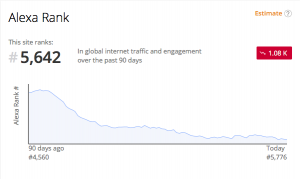
In general, the art market appears to be down like everything else. This spike in interest doesn’t necessarily translate to a spike in sales. If you look at the Alexa data for some common consumer online art hubs like Fineartamerica or art.com – both of those massive online retailers show declines in traffic. Big-name galleries are deploying online viewing platforms as well to make up for the lack of foot traffic. As art journalist Judith Benhamou-Huet reports, this hasn’t exactly translated into sales volumes. If anything, it is a survival stop-gap measure.
It is too soon to tell if this spike will actually translate into any type of trend. As an artist selling their work online can attest to – art worth spending some time with often conflicts with the “infinite scroll” behavior of online shoppers. The Google Trend line for online interest in wall art is certainly a very slow, gradual climb over the past 16 years. One can only hope that this unique time of increased search activity opens some doors previously thought closed.

(from the gallery black and white photography)


I no longer look at statistics on my website. It makes almost no sense to me, the magic that Earl mentions. I do have some of my images on FAA because it is so inclusive for me but there is a lot less profit. Nor, have I sold anything on the site. I have had them print and frame a couple images and been very pleased with their work.
Understandable Monte. Often I do it purely out of curiosity. I am trying to explore FAA a bit more, have been there 2 years, and really haven’t put a lot of work up there. Definitely a volume game.
In my family, I am the one who prefers blank walls, my wife likes anything cheap and “pretty” which leaves only my kids with any sense of good taste when it comes to putting art on walls. Unfortunately for them, they both have very limited wall space (not to mention limited income) but both have already acquired some nice pieces and if their income ever matches their tastes, I look forward to visiting them often as I am sure their homes will be like art galleries with living spaces attached.
As for Google analytics, I too have often wondered at these kinds of stats and how realistic, or useful, they are. My son has access to all sorts of graphs and stats on Amazon regarding trends, sales, rankings etc., all filterable on genre, price, country and so on but every now and then something shows up that makes no sense. Only just recently, one of his books ranked 4th under “Poetry” which was rather exciting until he realised that there were no sales to back that up. I can imagine that similar nonsensical stats occur in all aspects of the digital world when considering the massive volumes of data but the problem is always, what to do about it, how to use it to one’s advantage when something like your example shows up. I like Earl’s comment: It’s part science, part magic, part luck. That kind of applies to pretty much everything in life 🙂
Sounds like your kids inherited good taste from their dad! With both a writer and filmmaker in the family, I’m going to guess some interesting pieces.
Agreed on some of these stats being nonsensical. I am reminded of the cautions about correlation/causation in data.
“Part science, part magic, part luck “ – sounds like a good byline. (Credit Earl of course)
I’m not surprised people stuck at home for an extended period of time would want a new look to their “cave.” Wall art can be a quick and good fix. However, that’s only an option for those who still have income. Have overall sales of “Wall Art” increased or decreased during the pandemic or is that apparent yet? Interesting that searches for the term “Wall Art” are trending but visits to major sites for image wall art may be down.
In the early days of “Meandering Passage,” I use to track trends, keywords, and site rankings. In the end, my lasting impressions were its part science, part magic, and part luck. 😉
Earl, as far as I’m concerned, keywording and SEO is dark magic and rain dancing. It’s extremely tiring trying to keep up with it while trying to do everything else.
For me personally, art sales have not been good at all. I would never claim to have my finger on the pulse of the market either. I would have to dig deeper into the quarterly earnings of some of these big online giants to really try to piece together some of these indicators. Maybe I’ll save that for my “investigative art journalist” career. 🙂