


Bird photography is something I haven’t spent a lot of time on in the past few years. However, I have a lot of bird photographs in my archives. Many of them based on 35mm film, and more recently I have been redeveloping some shot on my first DSLR, a Nikon D2H. I took a trip with this camera to California which involved some seabird photography. And given I was rather tickled I could shoot as much as I wanted without all the film developing expenses (and film trash expenses in throwing away the majority), I ended up with a lot of images.
Seabirds in La Jolla, California
I visited La Jolla, California back in 2004, which is a popular spot for photographing pelicans and other seabirds. I remember birds there being quite approachable for the most part, quite habituated to people. This provided the opportunity to do some close-up work, even portraits of smaller birds like gulls.
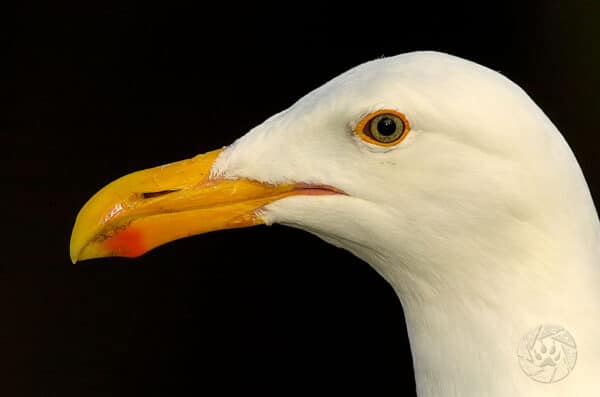
Of course now, 17 years later, the files from the D2H at only 4.1 Megapixels are probably laughed off by a lot of people as “worthless.” Even back then, a lot of photographers balked at the low resolution of this camera as compared to what was being obtained from 35mm film scans. But it did have a quality sensor in it, quite low noise, despite not measuring up in the megapixel obsession. I even wrote an article back then on getting some good quality enlargements from these meager files that still receives traffic to this day.
With some modern tools, like Gigapixel AI, texture enhancement in Lightroom, luminosity mask-based clarity application – I’ve been able to update many of these files to be good quality 12-15 megapixels to bring them closer to current standards. The fact is, even though 4.1 MP seemed adequate for many subjects then, when you are used to working with 36 MP files from a camera like a D810, they look noticeably soft today if left untouched.
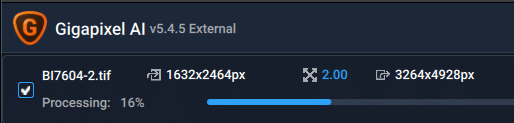
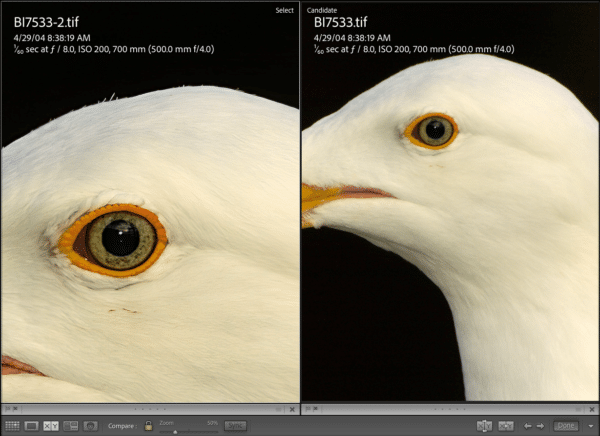
The success of these efforts is largely based on these are wildlife portraits. There isn’t fine detail throughout the entire frame for these tools to interpolate, allowing some concentrated efforts on where the most enhancement is needed, such as in the eyes. Sometimes upsizing wasn’t quite enough, so some localized sharpening, using Topaz Sharpen/Denoise tools and contrast adjustments helped a bit further.
Revisiting photo memories
Aside from just updating the technical aspects of these photographs, it was enjoyable to revisit them just for nostalgia purposes and some rewarding time spent with wildlife. Bird photography is definitely a very concentrated effort, and for seabirds, well – they aren’t species a guy from Michigan gets to spent time with very often. So going back and redeveloping some of these older files will have to do for now. The memories certainly aren’t worthless, and neither are the files.
Featured Image: Brown Pelican portrait (Pelecanus occidentalis) showing gular throat pouch, La Jolla, California Photo ID # BI7604


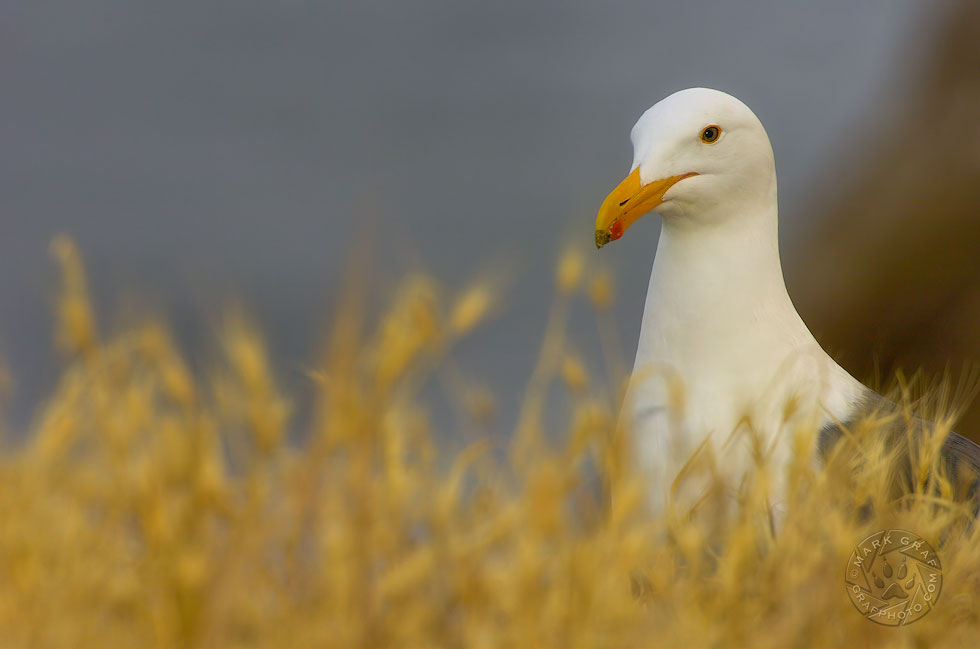
Mark, these are amazing. There are so many bird photographs these days but these really rise above the fray. The pelican leaves me speechless! I love it. And the gulls have been photographed with their personality intact. Sometimes I think bird photographers are carried away with the technical aspects – which is understandable because it’s so difficult – and they forget the overall effect. The life gets squeezed out of the image. That is so not true here! I feel a sense of benevolence in that last photo with the blurred foreground, as if this gull were a wise old soul. It’s silly anthropomorphism, but that’s what brings the photo to life for me. That warmth (which has to come from your own love of birds/nature) is what separates this from other bird photos.
As for the technical aspects you mentioned, I’m just happy that the tools are there and you know how to use them. It means I get to see these beauties! 🙂
Thank you for the too kind words Lynn. I suppose what you mention about there being so many is an aspect that makes them not such a high priority with me these days. I often just choose to watch vs. any significant effort to photograph. I’ll take a unique opportunity if it presents of course. And it is difficult, requires lugging some big lenses around, a lot of time, just to get a technically good image that may be empty in feeling.
It’s a whole other thing, bird photography. I don’t have any truly long lenses but sometimes I can’t resist and I photograph a bird anyway, then try to crop when I get home. But the real pleasure is in just watching, as you said.
Some really great shots there. Bird photography really is a specialty unto itself. It is amazing how shots with our older equipment are ‘obsolete’ but then with technical advancements can be used again!
I definitely have less ambition to put in the time it takes these days. Thanks Howard.
That pelican is perfect! Great geometry, excellent light and framing, and a beautiful color palette.
Thanks Joe, it is a favorite of mine.
I also like the first image. I’m not as tech savvy as you all seem to be nor do I have the software. I feel like I still don’t know all the buttons, whistles and sliders in Lightroom. Nor have I scanned any of my old slide and negatives. I must say that I have looked back at the images from my first DSLR, a NIkon D100, and have found I do have images that are very good in my book of standards. My first image with that camera was on Christmas Eve in 2002 at a christmas function. All of them were under exposed. ?
I have more wonderful experiences and memories of trips and adventures than I have wonderful images. I my case that’s more important at this stage of my life. However, after saying that, I really do want more images and more keepers. I enjoy this photography thing way too much.
I think everyone has their own personal limits on all this stuff. I like luminosity masks, but I only use maybe 20% of all the features the thing offers. Sometimes all the techno stuff just leads to feeling lost IMO.
A day for the birds. That first photo is wonderful. I’d just read a comparison of Gigapixel AI and the new upsizing feature from Adobe. In the article, the reviewer preferred Adobe’s solution. Personally, I’m pretty happy with Gigapixel and don’t have or use Adobe. But, it seems Adobe is quickly responding to any major software feature smaller niche companies have found to exploit; i.e. Topaz with Gigapixel AI upsizing and Skylum with Luminar AI sky replacement.
As a side note, I’m beginning to wonder what Artificial Intelligence “AI” means in these software packages beyond being a marketing ploy. We’ve had auto-adjustment features in software for years without it being considered AI.
I agree with you on the AI bit – I believe it is probably at least 50-60% marketing, maybe a bit of innovation. The tools seem better to me than previous solutions for noise, sharpening, and upsizing and some slider adjustments I’ve taken a liking to for the selective manner they adjust things. For me, that’s mostly what “AI” means – right or wrong – that it takes an individual image’s features into consideration versus just a blanket global change.
One thing I’ve found the AI tools don’t work very well on is film images. I’ve tried using them to clean up film grain or improve sharpness, and they don’t do well. Probably because the developers don’t really consider film images to be worth the extra coding effort.
I am not sure I have access to the new Adobe upsizing as I can’t update to Photoshop 2021 because a compatibility issue with my old computer. Gigapixel has been working for me for the most part, I don’t use it so often lately except to upsize some of these older 4 MP DSLR files while I have the motivation.
Well, today I opened my PS camera raw and saw Adobes new Enhancement feature that promises to duplicate the size of images without loss of quality… rests to be seen. Bird photography is by far my least favorite, but your top one is top beauty.
This technology for upsizing just continues to improve, breathing some new life into images made with older technology.
I can relate to your bird photography statement. It consumes a lot of time and you have to live with a low success rate in keepers for sure – and to be honest, often it is much more craft than art.