


Well time flies and it is that time of year again. You have been waiting in anticipation for the announcement – I can just feel it. Pantone® just announced their color for 2020 as Classic Blue.
From their press release:
“We are living in a time that requires trust and faith. It is this kind of constancy and confidence that is expressed by PANTONE 19-4052 Classic Blue, a solid and dependable blue hue we can always rely on. Imbued with a deep resonance, Classic Blue provides an anchoring foundation. A boundless blue evocative of the vast and infinite evening sky, Classic Blue encourages us to look beyond the obvious to expand our thinking; challenging us to think more deeply, increase our perspective and open the flow of communication.
Latrice Eiseman, Executive Director of the Pantone Color Institute

OK, first, I can really appreciate Mrs. Eiseman’s flair for language and ideas. She truly has a gift. Our abilities to express what colors mean to us is only limited by our understanding of the emotions they evoke. Pantone proclaims they have been influencing “product development and purchasing decisions in multiple industries, including fashion, home furnishings, and industrial design, as well as product packaging and graphic design” for 20 years with their Color of the Year selections. Next year is definitely not one resting on “trust and faith” but we can certainly use some expansion of thinking.
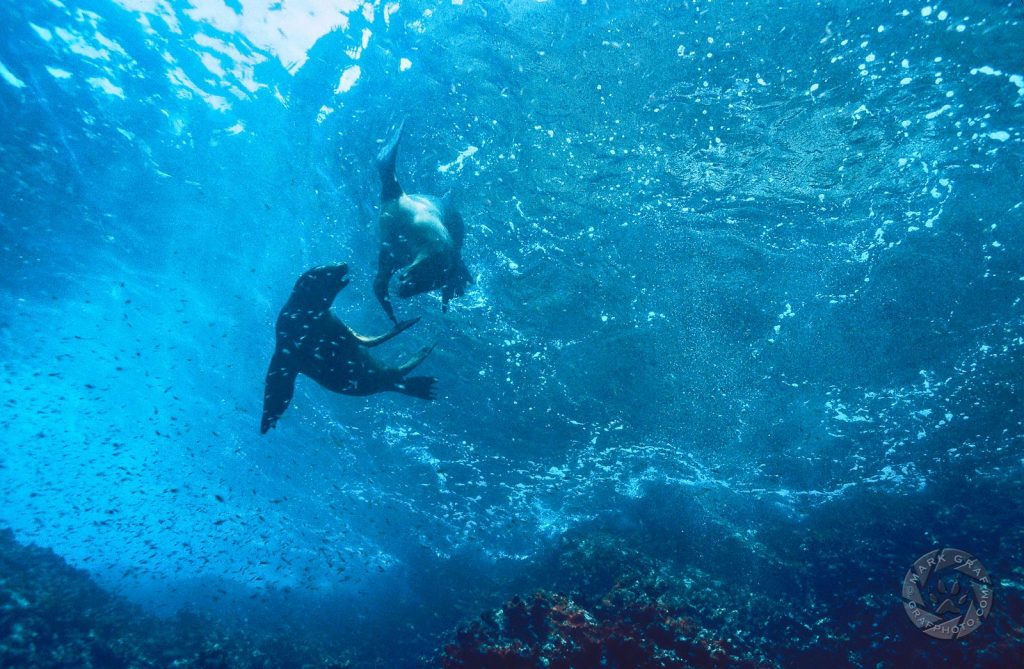
How many colors do we need?
I threw some shade at their pick of last year, Living Coral, because of the precarious position the coral reefs around the world are in today and their lack of acknowledgement of it. The very essence of that color is at the cusp of a major extinction event. If a company can claim to be such a major influence on so many industries and design choices, 2020 is a critical time to step up to the plate.
Of course Pantone® is not an environmental advocacy company, and sometimes people want to enjoy a beautiful color just for what it is, without any strings attached. I fully get that. In fact, all of these posts about this particular “event” may be a bit too far into the weeds for some. But Mrs. Eisemann did say Classic Blue should challenge us to think more deeply didn’t she?
The NPR show “Here and Now” recently did a story highlighting the CO2 / environmental hazards created by the fashion industry. The segment reported “The global fashion industry emits 1.7 billion tons of CO2 per year — more than the amount produced by international flights and shipping.” Fossil fuels are used extensively in the fashion industry, and microfibers are a growing concern with water pollution. An 80% reduction is required to meet future international emissions goals to limit the Earth to 2 degrees Celsius of warming. How much of that could be reduced simply by reducing the number of colors and variations?
“If we do not change course by 2020, we risk missing the point where we can avoid runaway climate change with disastrous consequences for people and all the natural systems that sustain us.”
António Guterres, Secretary-General of the United Nations (source)
More Colors – More Manufacturing Complexity
Coming from the automotive industry, I know how obsessed with color the industry is. The complexity of color and color matching infiltrates the entire supply chain from the smallest parts to the largest interior panels. All of it inspected with the most critical eyes and equipment. It creates a never ending system of complexity. I remember a joke how we had to keep track of 20 different blacks, but it is no joke to the manufacturing plants needing to reliably separate them.
‘Any customer can have a car painted any colour that he wants so long as it is black.’
Henry Ford (on the Model T)
Pantone® provides the color specs for Classic Blue to help fashion designers, interior designers, plastics manufacturers with duplication of this “in fashion” color for an increasing number of products, perhaps no different than last year’s version than just a trendy color. In a time where plastic recycling is failing and emissions keep rising, one has to wonder just how much more new stuff do we need, especially if the only significant difference is a color trend?
I started following the Color of the Year as a marketing curiosity. It was a fun exercise to see if I could find any photographs to match. Then I wondered if there would be any trends in photography shifting towards it. That was a bust, although you may be totally shocked that I am often out of the loop on fashion photography trends.

However, now my curiosity shifts towards asking “to what end?” More colors trying to drive the need for more things. The psychological aspects of color will always spark my curiosity. I remain in awe of those that can describe a color in such a poetic way. If Classic Blue has the qualities of “honesty and promises of protection” – there is no doubt that 2020 is going to be a challenging year for both.


My first thought about the flowery words for the paint were : Wow! That’s putting a lot of power into a color, a paint. I must admit that I did an eye roll, or two – It’s just paint! I’m not quite sure how it’s going to expand my thinking 😉 Maybe my thinking about paint, but, not much else … maybe I’m not profound enough.
I do love the pictures that you chose to represent the colors, those, in my mind, are much more thought-provoking.
I thought the same Paul. 🙂 I admire the gift of language though.
Hi Mark, as always, gorgeous photos and wonderful examples of Pantone’s COTY. But to be frank, I feel that Mrs. Eiseman may be putting a lot of responsibility onto this Classic Blue colour. In an age of click bait, tweeter feeds and endless streams of information, there is little to encourage us to think deeply. Doing so not only requires commitment and energy but also opens us up to risks like feeling guilty, uncovering disagreeable truths about ourselves, realising that the responsibility for making the world a better place may not lie solely with the generic “they” and “them”, be they the government or the fashion industry, or car manufacturers, or useless gizmo makers. In this technology-driven world, it seems people are willing to lose their privacy in exchange for convenience but are we willing to give up convenience in exchange for cleaner air and cleaner oceans?
In the last decade I have not met a single person who does not harbour some concern over climate or pollution, with that concern ranging from worry to outright fearfulness. But nor have I met anyone who has changed their lifestyle to match their level of concern. Sure, some have put solar panels on their roof, some sort their rubbish into recyclables and some buy an EV or hybrid, but we have to wonder whether any of that makes a real difference.
Of course, I may not be meeting the right people. With respect to this topic, I consider myself no better than any of the people I have met and so may be living in my own echo chamber. However, I have no doubt that I could do much more to have a positive impact. After all, I hear of people who have downsized to tiny homes, gone off-grid, sold their car, make clothes out of hemp and grow their own food etc. And they seem happier for it, perhaps because that type of change must surely have a real, positive impact. What is more, this minimalist lifestyle is most appealing to me and I feel that I too could do this. I cannot think of anything preventing me. And yet, I don’t. And I’m not sure why. Maybe on some level, I don’t want to give up the perceived convenience of my current way of life. It is, after all, rather expedient to jump in my car, go to the grocery store and pick up food, in all its convenient packaging. I do wonder though, if that convenience is real or something that has been sold to me through good marketing.
Maybe we need to complain less about the uselessness of governments or the evils of industry and put more of our energies into encouraging each other to become more like those people who have made a real change in their lives. Maybe that is just too naive. I don’t actually know what the answer is.
Apologies for this long-winded comment Mark. I blame that Classic Blue for “expanding my thinking”. Shame it wasn’t all that useful, though the blame for that stays with me.
I hear you loud and clear Cedric, and trust me – I love your long comments as they give me a lot to think about for myself! So thank YOU for taking the time to type it!
As far as individual actions, they are needed to some extent, but nobody should think that individual actions alone are going to solve anything. They are good for establishing credibility in leadership telling other people what they need to do, in scientists and activists for promoting to walk the talk. There are more individual scientists now refusing to fly except in the most needed circumstances. People are actually deciding not to have children because of fear of the future, and how population growth is contributing to all of this. But we shouldn’t fall prey to guilt one another to do more. That is exactly what big industry wants individuals to do, fight amongst themselves on who is “greener” to take focus off of them. And of course, we all are consumers of fossil fuels, the big evil companies’ customers somewhere down the line.
I fall in the camp where we need to put a higher price on the cost to pollute. That means a price on carbon, with rebates back to the poorest who can afford it the least. Then everything else “should” begin to fall in line. Industries will naturally have an incentive to innovate more to reduce their carbon / cost burden – just like they do with taxes! 🙂 Individuals will be forced to conserve more because it hits their bottom line more directly. People here in the US continue to buy big trucks and SUV’s because gas is cheap! Back when gas was getting quite expensive, sales of those vehicles tanked. Now, car companies are actually canceling small car platforms because they can’t profit as much off them, and they aren’t selling. Anyway, that’s my current thinking, and it keeps getting reinforced as one of the most doable solutions if we have the political will to do it. So I match your long comment with a long reply. 🙂
All good points Mark. I wasn’t suggesting that individual actions would solve the issues on their own and certainly not that we should guilt each other into action. I was simply wondering if community-planned, cohesive individual actions would perhaps provide a stronger signal to governments and industries that people’s views are changing. I find that for the most part, while many people talk the talk, there’s an underlying expectation that someone else will walk the talk, and that it should be done without any change to their current lifestyle. The “green” actions many people I know brag about doing, seems more like paying lip service to the issues at hand. The car example you give is a good example of this. What car manufacturer is going to build small eco-friendly cars when the market demands tanks and what government is going to jack up fuel prices when there’s always an election around the corner? But as I said in my original comment, I do not know where the answers lie but as I used to tell my kids: when looking for answers, a good place to start is with ourselves.
Good advice to your kids, it’s good for anyone actually. In the area I live, I find it hard to get most to take any of this seriously. Many are just not aware.
Oh man, I love that last image of the leaves. It is my kind of leaves. One thing I’m thinking of doing is painting my condo and thanks to your post I think I have a color I like to put in the kitchen and bedroom: back to nature
Haha, proof in advertising! 🙂 Looks like Behr is going to sell some paint.
Several wonderful images there. You’ve definitely done justice to ‘Classic Blue’!
Thanks Howard. Thanks also for letting me know my comments were broken.
One of the frustrations of running a website, you update something and it breaks something else. Seems to happen to me more often than not lately.